


After months of sourcing, interviewing, evaluating, and selecting the right candidate, it is understandable for clubs to feel a sense of accomplishment once an offer has been accepted. The search is complete. The position is filled. The hard part is over.
Or is it?
In reality, some of the most important work in the hiring process begins after the candidate says yes. While significant attention is often placed on attracting and selecting talent, many organizations unintentionally lose momentum during the transition from offer acceptance to onboarding. It is a period that can determine whether a promising hire arrives excited, engaged, and prepared, or uncertain, disconnected, and questioning their decision.
For General Managers and department heads alike, the transition between acceptance and arrival deserves the same intentionality as the search itself.
The Hiring Process Is Not Over
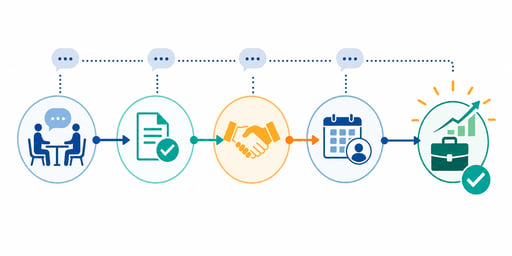
A common misconception in recruitment is that the offer letter represents the finish line. In practice, it is a handoff point.
Candidates often spend several weeks, and sometimes several months in higher leadership positions, between accepting an offer and starting their new role. During that time, they may be relocating, finishing projects, transitioning responsibilities, preparing family logistics, or navigating emotions associated with leaving an organization they may have served for years.
Without intentional engagement from the club, excitement can gradually give way to uncertainty.
The strongest clubs recognize that onboarding begins long before the first day of work.
The Silence Gap
One of the most common ways clubs lose momentum is through unintended silence.
Communication is often frequent and enthusiastic during the interview process. Then, once the offer is accepted, communication slows dramatically while internal preparations take place.
From the club's perspective, everything may seem on track.
From the candidate's perspective, however, silence can feel very different.
Questions naturally arise:
- What should I be preparing for?
- What does my first week look like?
- Who will I be working closely with?
- Is the club excited about my arrival?
Regular communication helps maintain confidence and connection during this transition period.
This does not require daily interaction. A thoughtful check-in, update, or welcoming message can go a long way toward reinforcing the candidate's decision.
Creating a Sense of Belonging Before Day One
The best onboarding experiences begin before the new team member ever walks through the front door.
Clubs that excel at onboarding often focus on helping new leaders feel connected before they officially start.
Examples might include:
- Introducing key stakeholders in advance
- Sharing strategic plans or organizational information
- Providing club history and culture materials
- Including spouses or families in relocation conversations when appropriate
- Sending welcome notes from leadership or board members
These gestures may seem small, but they communicate something important: you already belong here.
For executive-level hires, this sense of connection can significantly reduce anxiety and accelerate integration.
The First Week Sets the Tone
First impressions matter and onboarding often communicates more about a club's culture than any interview ever could.
A well-organized first week signals professionalism, preparation, and intentionality.
Conversely, a disorganized onboarding experience can create confusion before the new leader has even begun contributing.
Common onboarding frustrations include:
- Unclear schedules
- Missing equipment or system access
- Lack of introductions
- Limited orientation to club culture
- Assumptions that the new hire will simply "figure it out"
While most clubs would never intentionally create this experience, operational demands can sometimes push onboarding to the background.
Yet the first week often shapes a new leader's perception of the organization.
The Importance of Leadership and Board Engagement
Successful onboarding is rarely the responsibility of one person.
For department head hires, General Managers and senior leaders play a critical role in helping the individual understand expectations, culture, and relationships.
For General Manager hires, boards and search committees also have an important role to play.
Strong transitions often include:
- Clear communication regarding priorities
- Thoughtful introductions to key stakeholders
- Continued alignment around expectations
- Ongoing support during the transition period
This involvement should not become operational oversight. Rather, it demonstrates commitment to helping the new leader succeed.
When leadership remains engaged during onboarding, trust develops more quickly and misunderstandings are often reduced.
The First 90 Days Matter More Than We Think
Many onboarding programs focus heavily on the first day or first week. While those moments are important, successful transitions are often measured over the first several months.
New leaders need time to:
- Learn the culture
- Build relationships
- Understand member expectations
- Assess operations
- Develop credibility with their teams
The most effective clubs resist the temptation to expect immediate transformation.
Instead, they create opportunities for listening, learning, and relationship-building before expecting significant change.
For both General Managers and department heads, early success is often tied less to technical ability and more to understanding the unique culture of the club.
Balancing Structure and Flexibility
There is no universal onboarding template that works for every club. A large, multi-amenity country club will have different onboarding needs than a smaller city club or yacht club.
However, most successful onboarding experiences include a balance of structure and flexibility.
Helpful components often include:
- A clear onboarding plan
- Scheduled introductions and meetings
- Access to important information and resources
- Regular check-ins throughout the first 90 days
- Opportunities for feedback and questions
The goal is not to overwhelm new leaders with information. It is to provide enough structure to create confidence while allowing space for discovery and relationship-building.
Looking Ahead
The period between offer acceptance and full integration represents one of the most overlooked phases of the hiring process. Yet it is often where first impressions are formed, trust begins to develop, and momentum is either strengthened or lost.
The most successful clubs understand that recruitment does not end when an offer is signed. It continues through communication, onboarding, relationship-building, and thoughtful support.
When clubs approach this phase with the same intentionality they bring to the search itself, they create smoother transitions, stronger leadership integration, and a foundation for long-term success.
###
About the Author: Paige Frazier

A performance-driven thought leader and transformational manager, Paige began her career in private clubs in 2001. Her progressive development has provided extensive and comprehensive training, both in Club operations and in Team leadership. She has fostered her passion for hospitality and leading with a servant’s heart, beginning with food and beverage operations, continuing through to her most recent position as a General Manager, and she continues to seek opportunities to learn and grow every day. Paige has demonstrated an ability to streamline operations, identify and correct inefficiencies, and deliver strategic direction and initiatives that improve processes, teams, systems, and profitability. She is an influencer, with a skill set to build robust and mutually beneficial business relationships at all levels. Her expertise includes general private club management, resource planning and allocation, capital project management, membership relations and programming, cross-departmental collaboration, goal setting and attainment, procurement, talent acquisition and organizational strategy, operational mapping and analysis, and financial management, including general and cost accounting, budgets, KPIs, and forecasting. Paige also enjoys developing, mentoring, and leading high-performing teams. She thrives on creating and maintaining a positive and innovative Club culture and enthusiastically supports both teams and membership. Paige has a passion for creating vision, setting a course, and aligning people, resources, and relationships to deliver operational excellence.