

Let’s raise a glass to the Widows of Champagne, the women who made New Year’s Eve sparkle.
Once upon a time in France, when men were busy fencing, wig-powdering, philosophizing, and taking very long petits déjeuners, a group of clever widows decided to turn tragedy (and a few barrels of accidental bubbly) into a booming empire. It started with exploding bottles…
In the 18th century, Champagne wasn’t the elegant drink we know today. It was more like a chemistry experiment gone wrong. Bottles would ferment unpredictably, corks would pop on their own, and entire wine cellars sometimes detonated.
The men in the region were discouraged. The monks tried prayer. But it was the women, widows, specifically, who rolled up their lace sleeves and said, “Ah bien, maybe we can make this work.”
Meet the Queen of Bubbles: Barbe-Nicole Ponsardin, a.k.a. Veuve (Widow) Clicquot.
When her husband died in 1805, Barbe-Nicole was just 27, too young for retirement and too smart for embroidery. She inherited his struggling wine business and shocked everyone by saying, “Non, I’ll keep it.” Her in-laws were horrified. Her competitors laughed.
Barbe-Nicole quietly invented modern Champagne.
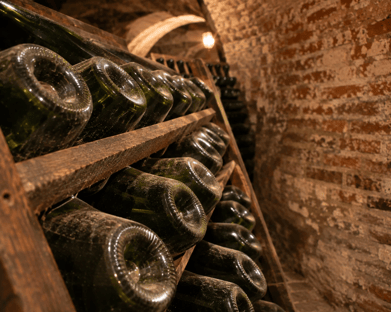
She perfected riddling, the technique of turning bottles upside down to collect the natural yeast, clarifying the juice, then popping it out cleanly. Before 1818, winemakers tinted pink Champagne using an artificial elderberry-based preparation that often dulled the wine's flavor and elegance. Madame Clicquot pioneered the modern blending method by mixing still red Pinot Noir directly into her white sparkling wine, creating rosé Champagne. She launched one of the first international wine brands. When Napoleon’s wars threatened her trade routes, she smuggled her Champagne through blockades like a bubbly bootlegger. And she wasn’t alone. Madame Louise Pommery turned a small vintner house into a global business and invented brut (dry) Champagne, because she thought things were getting a little too sweet. Madame Clicquot’s rivals, the Bollinger and Laurent-Perrier widows, also picked up the baton, proving that if life hands you lemons, you can absolutely ferment them into profit.
In an era when women couldn’t vote, solely own property, or speak at business meetings, these widows ran companies, negotiated exports, and changed the way the world celebrated.
However, amid all the success and celebration, there was still a problem: bottles kept exploding in transit. Merchants were losing barrels, corks were flying projectiles, and the occasional chandelier (or eyeball) fell victim to a scoundrel bottle.
Popular legend claims Barbe-Nicole solved this by pulling a wire from her corset to secure a champagne cork, the prototype for the creation of Champagne bottles' safety belt, technology that is known as the modern muselet and protective cap patented by Adolphe Jacquesson in 1844. Exactly six half-turns to loosen the wire securing the cork, which tamed the bubbles and saved countless ceilings across Europe.
Un trait de génie! The moral of the story: Behind every great bottle of Champagne is a woman who refused to stay quietly in mourning, and instead said, “Pass me the ledger and some grapes.”
So, in this season of bubbly celebrations soon to commence, twist open a bottle and remember: That satisfying “pop!” isn’t just carbonation escaping. The desired demure pppffffftt when the cork is loosened is history, liberation, and maybe a little bit of sass, bottled by women who made resilience sparkle.
Santé, Mesdames!
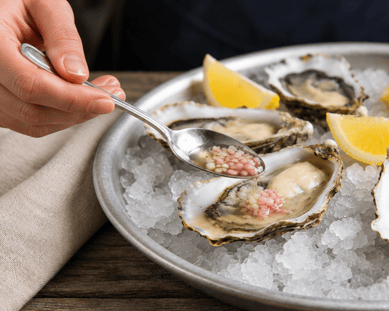
To accompany the bubbles this holiday season, crack open a dozen or two bracingly briny oysters and serve them with this classic mignonette.
-
1 shallot, finely minced, scant two tablespoons
-
½ cup Champagne vinegar
-
2 tablespoons Champagne
-
½ teaspoon freshly ground black pepper
Place all ingredients in a small bowl, stir to combine, and refrigerate. Serve chilled, spooned over oysters.
###
About the Author: Chef Mary Howley
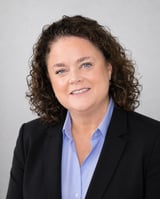
Chef Mary Howley is a former Executive Chef of her own catering company, several privately owned country clubs, and fine dining restaurants. She has studied throughout Europe and honed her skills working with a myriad of culinary styles and foods. At RCS, she is the resident culinary consultant providing guidance on menu engineering, overall food & beverage management, back of house operations, and training. She had the honor to serve as research and development chef for Food Unlimited, and held the position of Pastry Chef in two James Beard Dinner Events. Mary has a Bachelor of Arts degree from the Maryland Institute, is a Certified Professional Food Service Manager, a certified TIPS trainer, and a member of the Women Chefs & Restaurateurs Association. Mary is passionate about cross-utilization, seasonality, sustainability, and the precious connection between people and food.