

Call almost any business today, and you will hear a recording before you hear a person.
"Press 1 for hours. Press 2 for reservations."
That is exactly why human connection matters more than ever.
When someone remembers our name, notices we seem tired, or goes one step further than they had to, we feel it. Hospitality has always lived in these small human moments. In a world learning to run without them, these meaningful moments have quietly become our greatest differentiators.
The moments are almost always created by the people on our teams, often the very people who hear the least about the impact their thoughtful gestures make.
A Fair Question
Many of the young people joining our teams grew up with a ribbon for participating and a trophy at the end of every season. Then they arrived at work, poured themselves into the job, and heard very little. It would be easy to call that entitlement. I see a fair question: does anyone here see me? Every generation asks the same question, whether out loud or not. Very few people have ever left a job because they were recognized or thanked too often.
The simplest way to learn what will feel meaningful to each person is to ask: "When you've done something you're proud of, how do you like to be recognized?" Then remember the answer and recognize them accordingly.
Noticing The Moments That Matter
Recognition is how a leader says, "What you just did is exactly what we want more of. That kind of care is who we are."
The recognition that truly motivates is specific. "Thanks for everything today" is kind. "When Mrs. Ellis seemed overwhelmed, you slowed down, walked her to her table, and made her laugh" is a gift. Timing matters, too, because a thank-you loses its warmth the longer it waits. Above all, appreciation must be genuine. People can sense the difference between a leader checking a box and a leader who truly noticed.
It is worth looking closely at who we tend to overlook. Our most dependable people can become almost invisible, precisely because we trust them to handle things. "They know I appreciate them" is an assumption worth checking.
Why Recognition Matters So Much
Happy people are enthusiastic, and that energy is contagious. You can feel the difference the moment you walk into a place where the team is happy to be there. The greetings are warmer, the energy is lighter, and the small extras happen without anyone asking. In short, a culture of recognition taps into your team’s discretionary effort.
Recognition is also one of the most powerful retention tools a leader has, and appreciation costs nothing. People rarely leave because of one hard day. They leave when, over time, they stop believing anyone notices their efforts. When team members feel seen, they stay, their relationships with members and guests grow deeper, and those members and guests stay, too. In this way, the recognition conversations touch the team and your guests.
It’s important to make room for appreciation now, rather than waiting until a resignation letter prompts you to explain how much someone meant to the organization.
The Flowers On The Desk
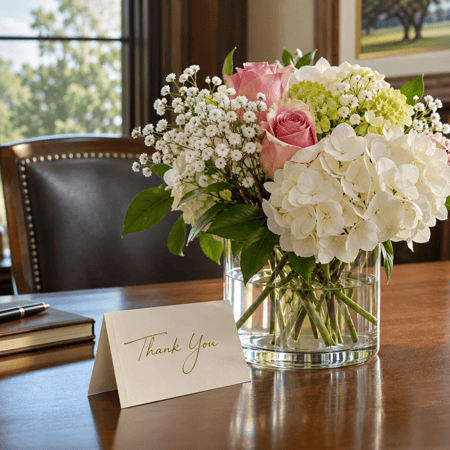
Think about the last time flowers were delivered to someone at work. Everyone noticed. Colleagues stopped by to admire the arrangement, and for a moment, the whole workplace shared in the joy.
Public recognition works the same way. When we celebrate someone in front of their peers, the entire team sees a model of what exceeding expectations looks like and learns that going the extra mile gets noticed here. Hilton's Catch Me at My Best program captures this beautifully by inviting guests, managers, and coworkers to "catch" team members delivering exceptional hospitality. Colleagues often see the quiet contributions a leader never witnesses.
Constructive feedback deserves a different setting. A private conversation protects the person's dignity and tells them we respect them enough to be honest and care enough not to embarrass them.
Praise in public builds the culture. Correction in private protects the trust that holds the culture together.
When Praise And Coaching Share The Same Room
There will be seasons when a leader celebrates the team in the morning meeting and finds herself coaching the basics by afternoon. Those days can feel discouraging.
Recognition and coaching were never meant to compete. Celebrating tells people what to repeat. Coaching shows them where to grow. It also helps to remember that "basic" is a word we earn through experience. Someone once took the time to show us, often more than once.
For those who are new, coaching will naturally come more often than applause at first. Frequent coaching means someone believes the new team member is worth investing in. Over time, the coaching becomes lighter, the encouragement more frequent, and the person who once needed reminders begins leading the way for the next new hire. When someone does improve, tell them.
And when the fundamentals slip, it is worth asking ourselves a gentle question: have we made the standard as clear as we believe we have?
The People Behind The Experience
The higher we rise, the quieter the feedback often becomes, and it can be tempting to think, "Nobody thanked me for doing my job." Yet leadership asks us to keep filling our team's cups, even in the seasons when no one seems to be filling ours.
Before anyone on our team can make a guest feel welcome, comfortable, understood, and important, team members need to experience those same four feelings themselves.
Somewhere on your team today, someone will create a moment a guest remembers for years.
Will anyone tell them?
###
About the Author: Whitney Reid Pennell

Whitney Reid Pennell is the Founder and President of RCS Hospitality Group (formerly Reid Consulting Services), a firm she launched over two decades ago to bring her experience, education, and passion for excellence to the private club and hospitality industry.
Throughout her career, Whitney has helped clubs navigate an evolving landscape shaped by shifting demographics, changing workforce dynamics, and advancing technology, while staying grounded in the timeless principles of hospitality. She is known for her ability to balance innovation with tradition, ensuring clubs remain both relevant and true to their core values.
With a hands-on approach and deep industry expertise, Whitney and her team partner with clubs to strengthen operations, elevate service, and build lasting relationships that support long-term success.